Your PIC Is Now Making Decisions They Were Never Trained to Make
For years, when the Office of the Attorney General ruled that certain information was confidential, it told you exactly what to redact. Your PIC could follow the ruling line by line and know what to withhold.
That practice has changed.
The Open Records Division has shifted to a new approach. Rather than identifying specific information subject to redaction, ORD now notes the applicable statutory sections and leaves it to the governmental body to identify and apply the redactions itself. The ruling tells you that information subject to, say, section 552.117 or 552.130 must be withheld. It does not tell you which specific portions of your responsive documents fall under those sections. That determination is now yours to make.
For attorneys and experienced PICs, this is manageable. For everyone else, it is a significant new burden.
Why this matters
If your governmental body releases information that should have been withheld, that release can have lasting consequences. Once information is out, it is out. And if your PIC misidentifies what falls under a particular exemption and releases something that should have been redacted, you cannot undo it by pointing to the ORD ruling. The ruling only told you what categories apply. The judgment call was yours.
This is not a situation where close enough is good enough. A redaction applied too broadly means you are withholding information a requestor is entitled to. A redaction applied too narrowly means you may be releasing information that the Act protects. Neither outcome is acceptable, and both create real exposure.
What your PIC needs to know
Most public information coordinators learned their jobs before this change. They were trained to follow ORD's lead on redactions, not to make independent exemption determinations from statutory text. That training is no longer sufficient.
Your PIC now needs to understand what each cited exemption actually protects, how to read a responsive document against that standard, and how to apply redactions consistently across a production. That is a different skill set from what the job required before.
The PIA Coloring Book
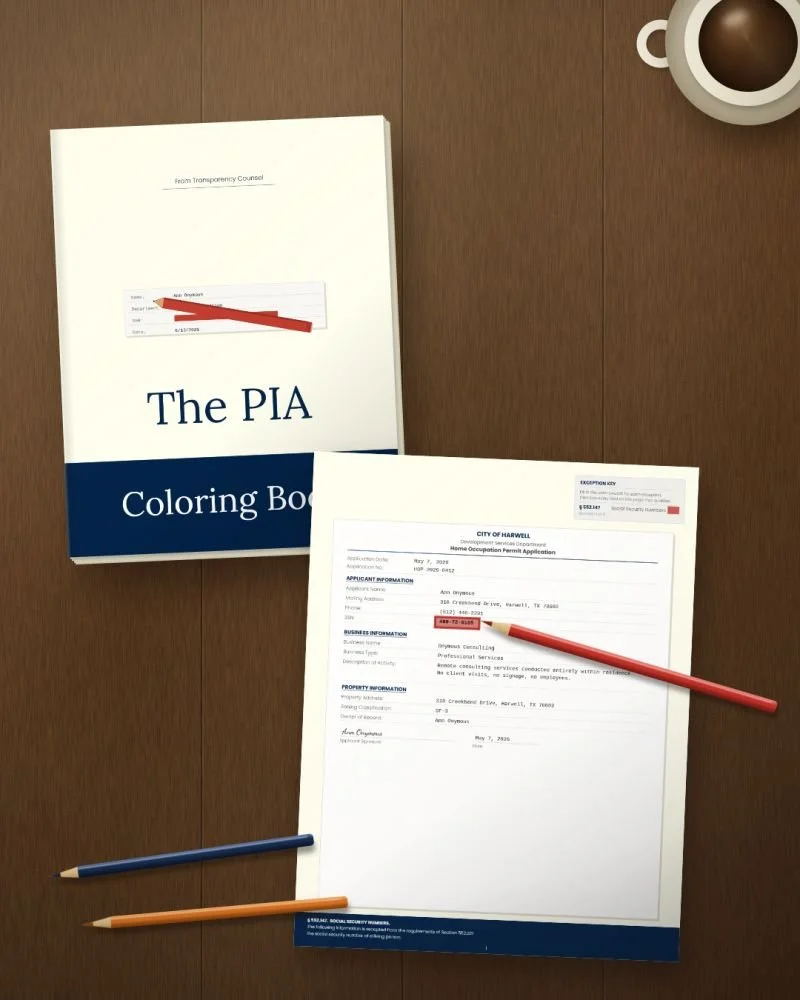
I created the PIA Coloring Book specifically to address this gap. It is a practical, visual training resource that walks PICs through identifying and applying mandatory redactions with confidence. It covers the exemptions most commonly cited in ORD rulings, shows PICs how to read a document against each standard, and gives them a repeatable process they can apply to every production going forward.
It is not a legal textbook. It is a working tool designed for the person actually doing the redactions, not the attorney supervising them.
If you think your PIC would benefit from a copy, reach out at Justin.Miller@TransparencyCounsel.com and I will send one your way.
